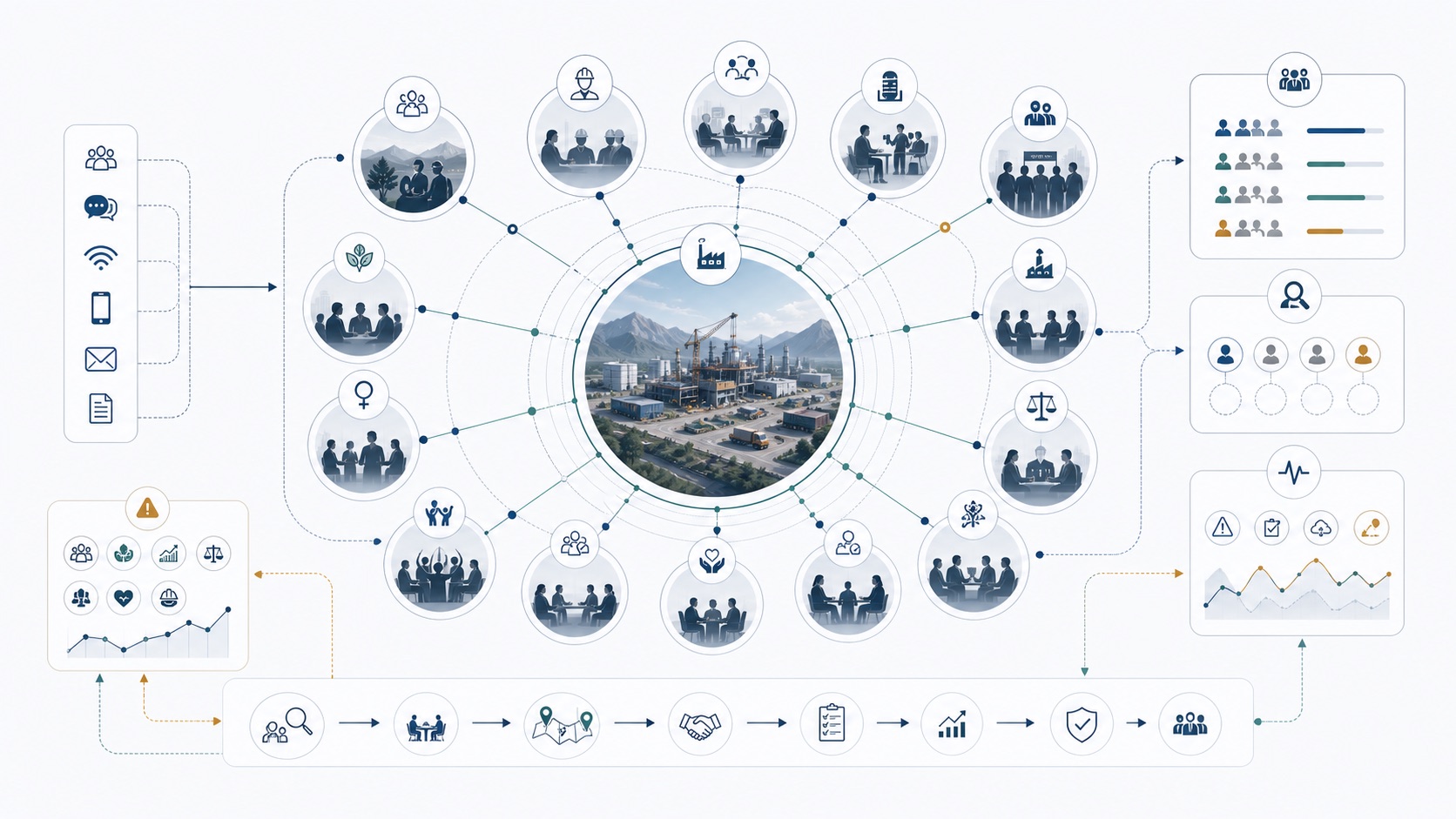
Clarify project stage, risk pathways, existing evidence, stakeholders, internal owners, urgent safeguards, and priority decisions.
Services
Modular support for real operating decisions
Begin with a focused diagnostic, select the workstreams that address material gaps, test action through a bounded pilot, and scale only when internal ownership and safeguards are ready.
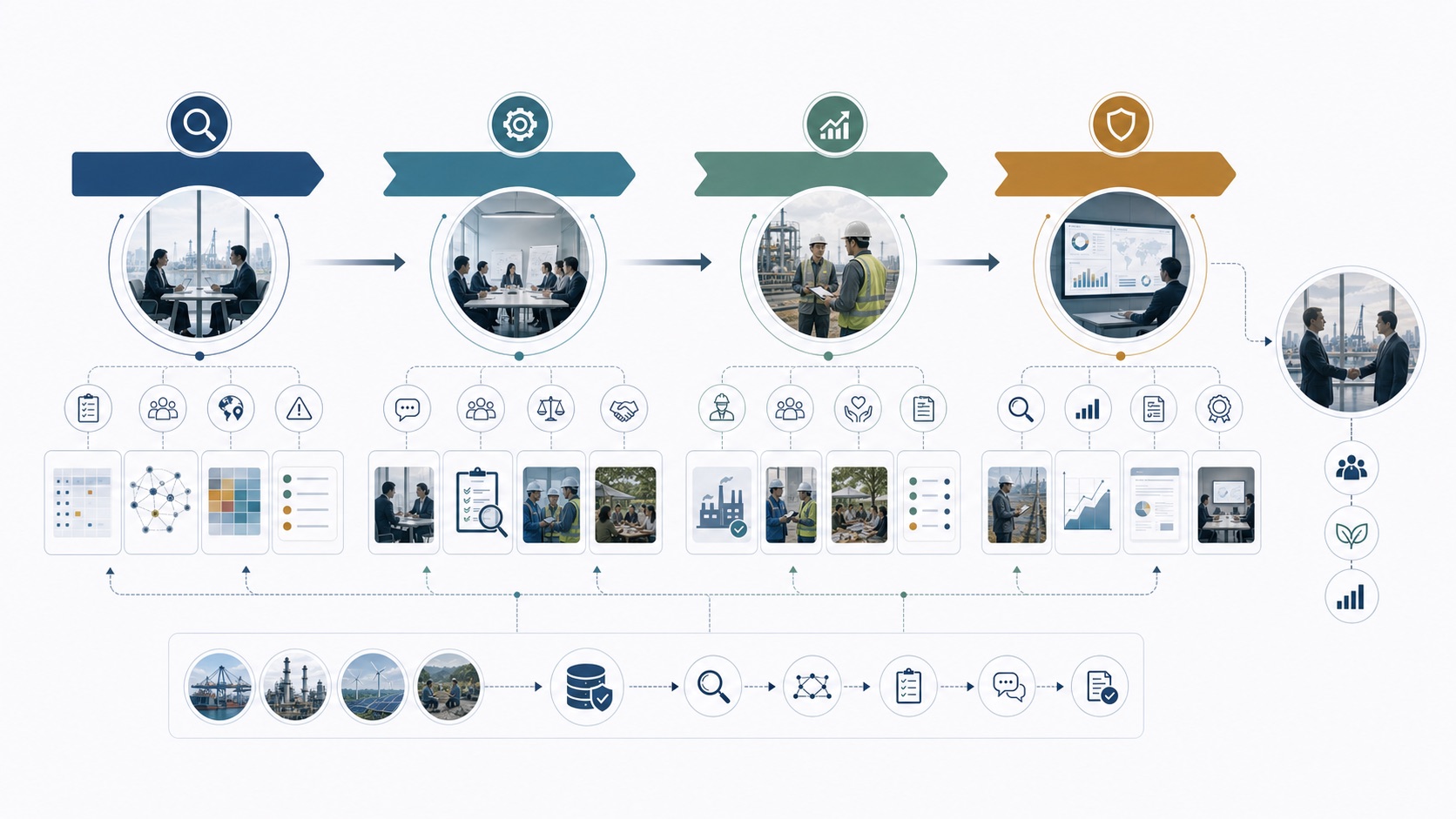
Engagement path
Diagnose, design, implement, verify
Select a proportionate scope, methods, deliverables, engagement boundaries, data rules, and decision gates.
Test one material issue or site before broader rollout, with protected feedback and documented learning.
Track actions, confirm appropriate outcomes, review recurrence, communicate limitations, and plan handover.
Service modules
Project, supply-chain, and remedy workstreams
Each module is adapted to context. Deliverables distinguish stakeholder evidence, professional judgment, legal questions, and unresolved information.
Project and regional baseline
Operating context, organizational stakeholders, vulnerable groups, labour and community issues, information flows, and ethical entry conditions.

Supply-chain risk and evidence
Entity and relationship mapping, source review, evidence status, risk pathways, data gaps, escalation criteria, and decision records.
Stakeholder engagement design
Participation strategy, worker and community engagement, NGO and union dialogue, disclosure boundaries, feedback loops, and commitment tracking.
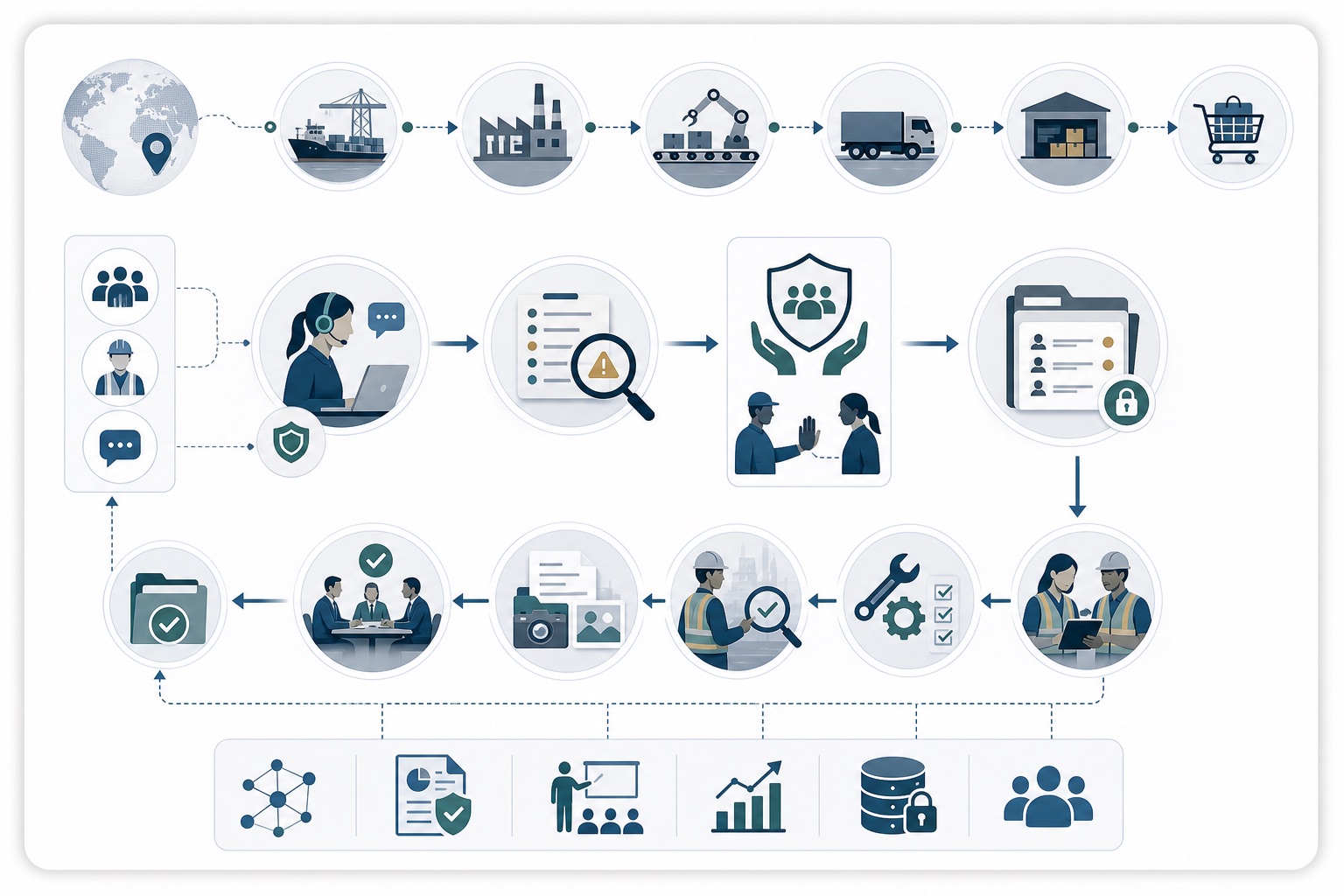
Grievance and remedy diagnosis
Accessibility, trust, non-retaliation, case governance, referral, investigation boundaries, remedy design, closure evidence, and recurrence prevention.

Worker-driven micro-change
Worker-informed improvements in recruitment, wages, hours, safety communication, accommodation, contractor conduct, training, and feedback.

Independent monitoring and learning
Commitment registers, implementation reviews, affected-person feedback, evidence checks, unresolved-risk reporting, and responsible handover.
Typical deliverables
Decision-ready, not report-heavy
- HRDD scope and governance note
- Project and relationship map
- Organizational stakeholder map
- Risk and impact pathway matrix
- Evidence and source register
- Stakeholder engagement plan
- Grievance and remedy diagnosis
- Corrective-action and commitment register
- Independent monitoring and learning report
- Exit and handover note
Public and internal versions are separated
Public outputs support transparency and learning. Internal records preserve protected identities, detailed allegations, remediation gaps, legal questions, and early warning signals needed for responsible management.
Choose scope after the diagnostic
Share the project stage, country or region, known issues, available materials, and the decision that needs support.