
Prioritise scale, scope, irremediability, and likelihood rather than only commercial exposure or easy-to-measure issues.
Approach
A management process, not a one-off audit
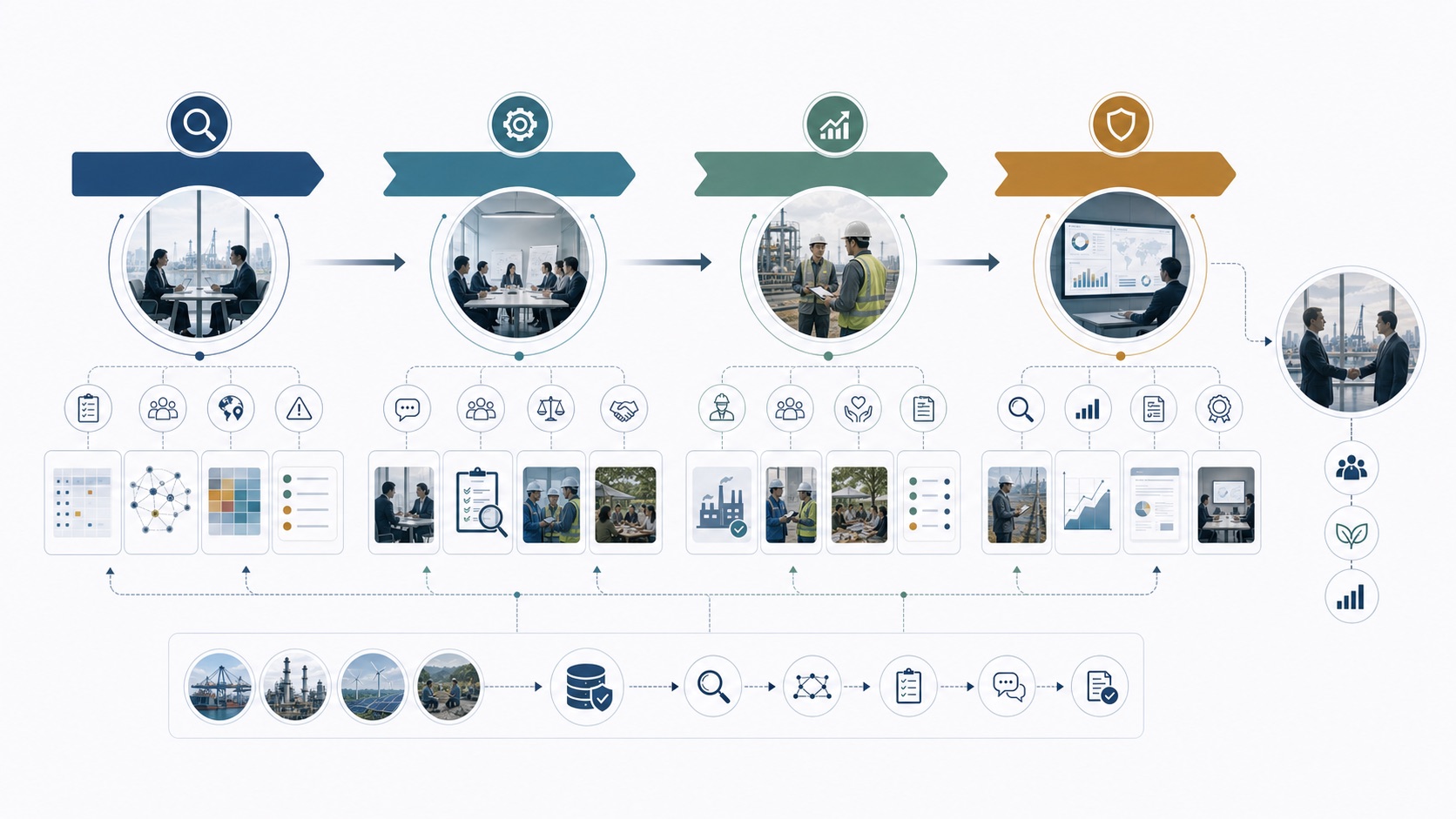
Effective HRDD connects governance, impact assessment, stakeholder engagement, operational decisions, remedy, tracking, and communication in a continuous cycle.
Design principles
Start with impact on people
The process is proportionate to risk and designed around decisions the company and its business partners can actually implement.
Include affected and potentially affected people, worker representatives, community organizations, and specialist perspectives.
Translate findings into responsibilities across operations, HR, procurement, security, legal, finance, and contractor management.
Address harm where appropriate, test outcomes with affected people, and change systems that allowed the impact to occur.
Due-diligence cycle
Six steps with decision gates
Each stage produces a decision-ready record rather than an isolated report.
Embed
Mandate, policy, governance, resources, and escalation.
Scope
Context, relationships, stakeholders, and severe-risk pathways.
Assess
Evidence, rights-holder input, causes, and leverage.
Act
Prevention, mitigation, cessation, and remedy design.
Track
Implementation, outcomes, recurrence, and verification.
Communicate
Methods, limitations, progress, and unresolved issues.
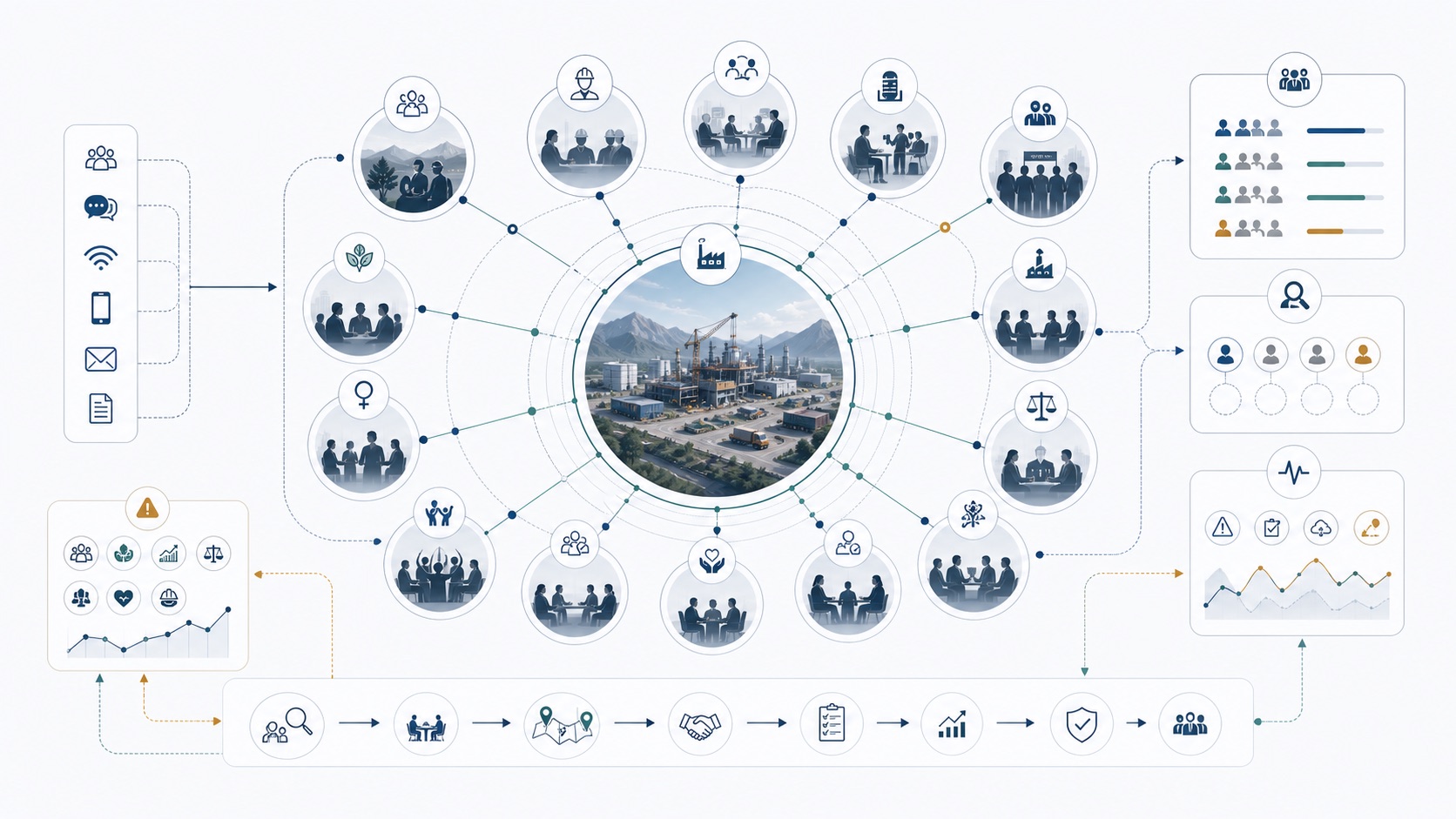
Stakeholder engagement
Engagement must be safe enough to be useful
- Map formal organizations and informal networks before selecting participants.
- Assess language, accessibility, representation, retaliation, gender, migration, and digital-security risks.
- Explain purpose, information use, confidentiality limits, and what the process can change.
- Separate management interviews from worker and community engagement where power may suppress evidence.
- Provide feedback on how concerns were understood, acted on, referred, or left unresolved.

Evidence architecture
Keep the chain from source to decision visible
Minimum decision record
Issue, affected group, source and confidence, severity rationale, business relationship, owner, action, deadline, safeguard, status, verification method, and unresolved question.
Sensitive identities and case details are separated from management reporting. Public communication should never create new risk for workers, communities, defenders, or complainants.
Reference framework
International standards informing the model
These references guide practice design. Applicability of specific laws depends on jurisdiction, entity, value chain, and facts.
- UN Guiding Principles on Business and Human RightsAssess impacts, integrate and act, track responses, communicate, and enable remedy.
- OECD Due Diligence Guidance for Responsible Business ConductRisk-based due diligence across operations, supply chains, and business relationships.
- ILO–IOE Combating Forced Labour HandbookPractical forced-labour prevention and response grounded in international labour standards.
Define the decision before expanding the assessment
A bounded diagnostic identifies the most material evidence and engagement gaps.