
Assess participation, risk, action, and remedy from the perspective of people who may be affected.
Safeguards
Do not create new risk while investigating existing harm
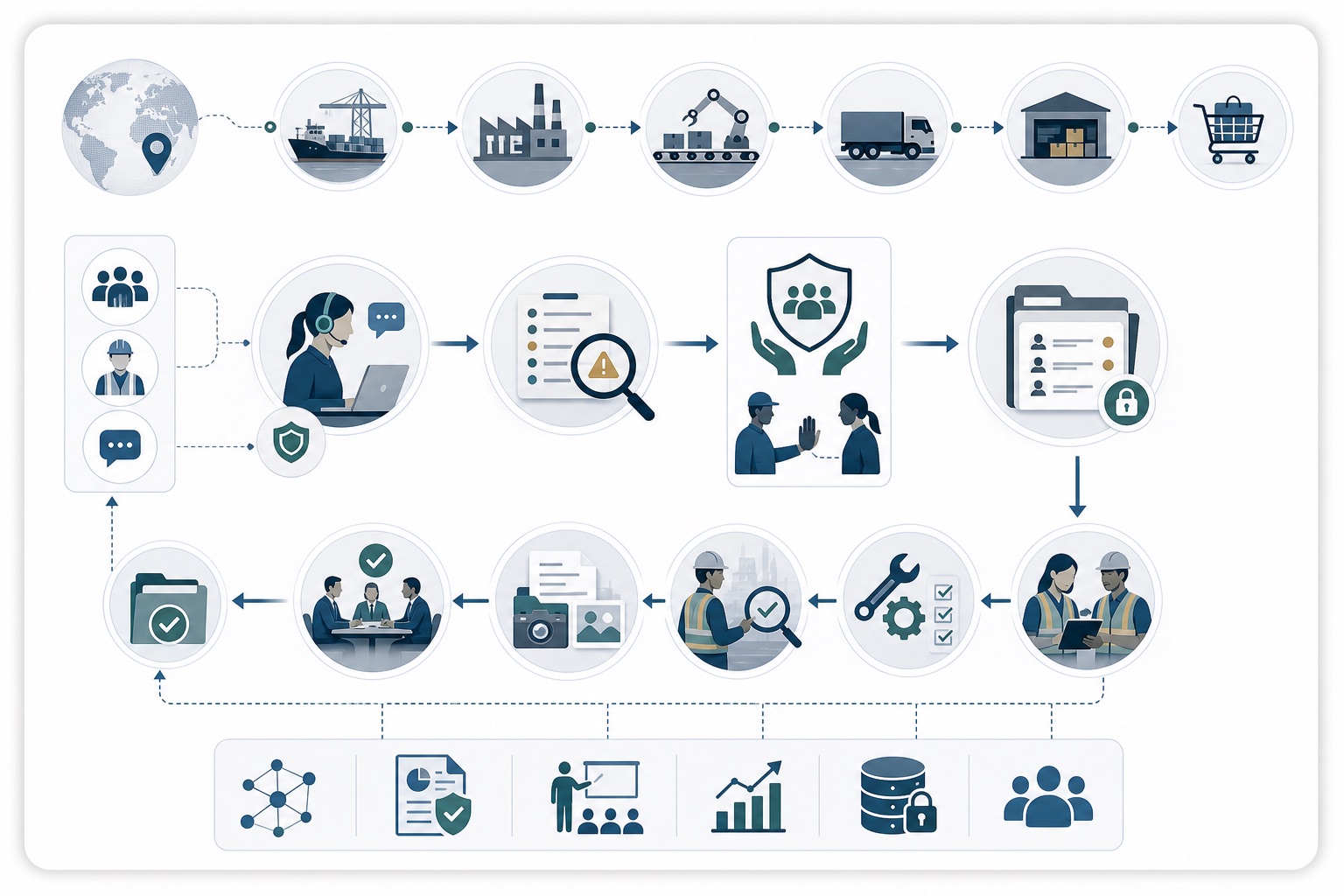
Credible due diligence protects affected people, sources, partners, and staff while preserving evidence discipline, fair response, and organizational accountability.

Core safeguards
Conditions for responsible engagement
Explain purpose, voluntary nature, information use, limits, potential consequences, and available alternatives.
Assess reprisal before engagement and maintain escalation, referral, and stop-work conditions.
Collect only what is necessary, separate identity data, restrict access, and define retention and deletion.
Distinguish facts, allegations, views, analysis, legal questions, unknowns, and protected information.
Disclose roles, funding, interests, review-team composition, recusal decisions, and influence limits.
Give relevant parties an appropriate opportunity to respond and correct factual errors without exposing sources.
Do not treat an action as closed until suitable evidence shows implementation and appropriate outcome.
Stop and referral conditions
Some work should not proceed
- Worker, community, source, or staff safety cannot be responsibly managed.
- The commissioning party will not provide access to decision owners or accept basic independence boundaries.
- Participation is presented as voluntary but refusal could cause disadvantage.
- The requested activity would require unauthorized surveillance, coercion, deception, or unlawful data processing.
- A specialist protection, medical, legal, law-enforcement, or emergency response is required.
- Public disclosure would create a foreseeable risk that cannot be mitigated.
Practice boundaries
What this work does not claim
No certification
Participation, review, or completion does not certify compliance, absence of harm, or conformity with every applicable law.
No legal determination
HRDD findings identify impacts, evidence, and management implications; legal conclusions require qualified jurisdiction-specific advice.
No guaranteed social licence
Stakeholder engagement cannot eliminate criticism or convert participation into endorsement of a project.
No replacement of rights-holders
Consultants, audits, and digital systems do not replace worker voice, community participation, trade unions, or legitimate representatives.
No evidence laundering
Third-party initiatives and datasets may support due diligence, but companies retain responsibility for relevance, quality, action, and remedy.
No disclosure at any cost
Transparency is balanced with safety, privacy, confidentiality, legitimate legal limits, and protection of affected people.
Safeguards must be designed before field engagement
Risk, consent, data, escalation, referral, and disclosure boundaries belong in the initial scope.